

October is Audiology Awareness Month
In 2008, the American Academy of Audiology established Audiology Awareness Month to promote awareness of hearing health and the role of audiologists in diagnosing and treating hearing and balance issues.
Q: What is an audiologist?
A: Audiologists are healthcare professionals who evaluate, diagnose, treat, and manage hearing loss and balance disorders in individuals of all ages from infants and teens to adults. Most audiologists have earned a Doctor of Audiology (AuD) degree, but some may also hold Doctor of Philosophy (PhD) or Doctor of Science (ScD) degrees. Audiologists are required to pursue continued education to stay updated on the latest information and research and to maintain their state-required license.
Q: When should I see an audiologist?
A: Signs of hearing loss or a balance disorder can be subtle. Prolonged hearing and balance issues that are not treated can cause long-term damage. Some common signs of hearing loss or balance disorders include:
- Asking those around you to repeat what they say
- Feeling like people around you mumble or don’t speak clearly
- Having difficulty hearing and understanding in noisy environments
- Turning up the volume on the television or radio
- Feeling dizzy or lightheaded
Q: How can an audiologist help me?
A: An audiologist can help to diagnose hearing loss or balance issues and provide treatment options including hearing aids, cochlear implants, assistive listening or alerting devices, and aural hearing rehabilitation. Audiologists can also refer patients to physicians or other specialists when their hearing or balance problems may be related to different health conditions.
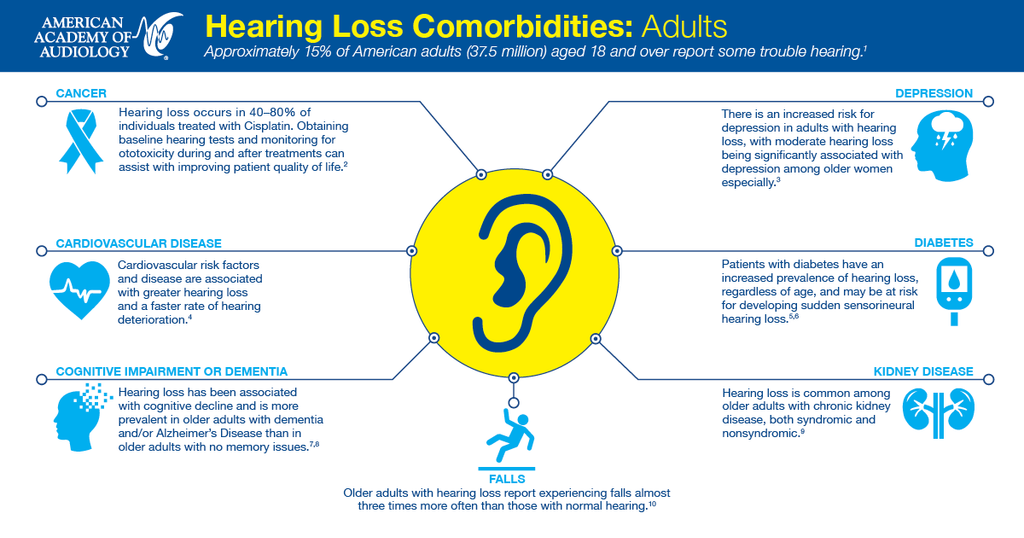
There are many benefits to treating hearing loss and balance disorders, including reducing the risk of dementia, reducing the risk of falls, reducing tinnitus, and keeping you engaged with friends and loved ones. Studies also show that patients with hearing aids fit and supported by an audiologist report significantly higher satisfaction with their hearing aids than with hearing aids purchased over-the-counter or online. We at Simply Sound Hearing Care are proud to be your local source for audiology support in the community!
New Products
The end of summer has been a busy time for the hearing aid industry, with many manufacturers launching new products. With claims of artificial intelligence helping to reduce background noise, technology to focus on the conversations you want to hear, and sleeker designs it can be hard to know which is the “best” hearing aid.
The reality is that there is no single best hearing aid. Just like there is no best car, no best type of music to listen to, and no place to vacation, there is no best hearing device. There are many factors to consider when choosing a hearing aid including the type and degree of your hearing loss, the size of your ears, whether you wear glasses or oxygen, the environments in which you will wear the hearing aids, etc.
At the hearing aid evaluation appointment, your audiologist will work with you to assess the best hearing aid for your needs and will make a recommendation. This appointment is a good time to share any concerns you may have about hearing aids or things you liked or did not like about past hearing aids you have worn.
New hearing aid technology does show distinct improvement in its ability to focus on close speech in noisy environments and a better ability for the hearing aids to accurately identify noise. Using AI, hearing aid programs learn from their environments and can receive updates of their computer chips over time. This means current hearing aids “upgrade” over time, and you get the benefit of better hearing as it becomes available. Be sure to contact us at Simply Sound Hearing Care if you would like to learn more about the latest hearing aid technology advances.
Navigating Holidays with Hearing Loss
The holiday season can be busy and exciting with parties and family gatherings, but for many people the season can be a source of frustration and overwhelm. People with hearing loss frequently report difficulty hearing and understanding conversations in noisy environments. This can lead them to avoid holiday gatherings or to feel left out of conversations with others.
Current hearing aid technology can greatly improve one’s ability to hear in noisy environments, but hearing aids alone cannot solve the whole problem. Its important to recognize the limitations of hearing aid technology and to take steps to improve your hearing in other ways.
- Face the person you are trying to hear. Hearing aids use directional microphones to focus on a speaker. In noisy situations, the microphones become focused mostly in front of you- toward the person you are looking at. If you are seated at a long table, your hearing aid microphones are not focused upon the person to your side at the other end of the table. Consider sitting at a round table where you have a better opportunity to look toward someone who is speaking.
- In noise, try to have most of the noise behind you. Because directional microphones become forward focused in noise, it helps to have most of what you are trying to hear directly in front of you. If you are seated at a restaurant with the restaurant crowd in front of you, that is what you will hear. If you are seated with your back to the restaurant crowd (facing a corner), you will hear less of the crowd and more of the people in your party.
- Minimize “extra” noise as much as possible. Turn off the television or music when you’d like to have a conversation. People without hearing loss may not realize how distracting the television or music can be in the background. If you are not comfortable asking someone to reduce or eliminate these sounds, try moving to a quieter spot for the best opportunity to hear conversations.
- Let others know what you DID hear, rather than using the phrase, “what did you say?” If you understand part of someone’s sentence, tell them. This way, the speaker can repeat just the part you didn’t hear or rephrase a certain part and avoids that part getting lost in the sentence. For example, if your friend says, “we are meeting Sally at Red Lobster in an hour,” you may have heard “we are meeting Sally at *inaudible” in an hour.” You heard most of the sentence. Asking someone to repeat the entire sentence may not help if the words “Red Lobster” are being lost in the other words. Consider saying, “Where are we meeting Sally in an hour?” This allows you to place your focus on a smaller part of the message.
Book a hearing aid check appointment with Simply Sound Hearing Care before the holiday season to ensure your hearing aids are clean and functioning their best so that you can enjoy the special moments with family and friends!

Simply Sound Hearing Care
4665 Cornell Road, Suite 155
Blue Ash, OH 45241
(513) 772-2999)
